

Recurly alternatives
Stop paying the hidden cost of a three-vendor billing stack
Recurly handles subscription management, but teams still need a gateway and tax tooling. Paddle is the leading Recurly alternative and replaces the need for multiple vendors, saving you up to 25% on total cost of ownership.


Four reasons Recurly customers move to Paddle

Offload tax + compliance liability
Recurly is not a Merchant of Record (MoR), so you’re still exposed to risk and tax compliance obligations. Paddle is a MoR, so risk and liability do not stay in-house.
Lower total cost of ownership with one platform
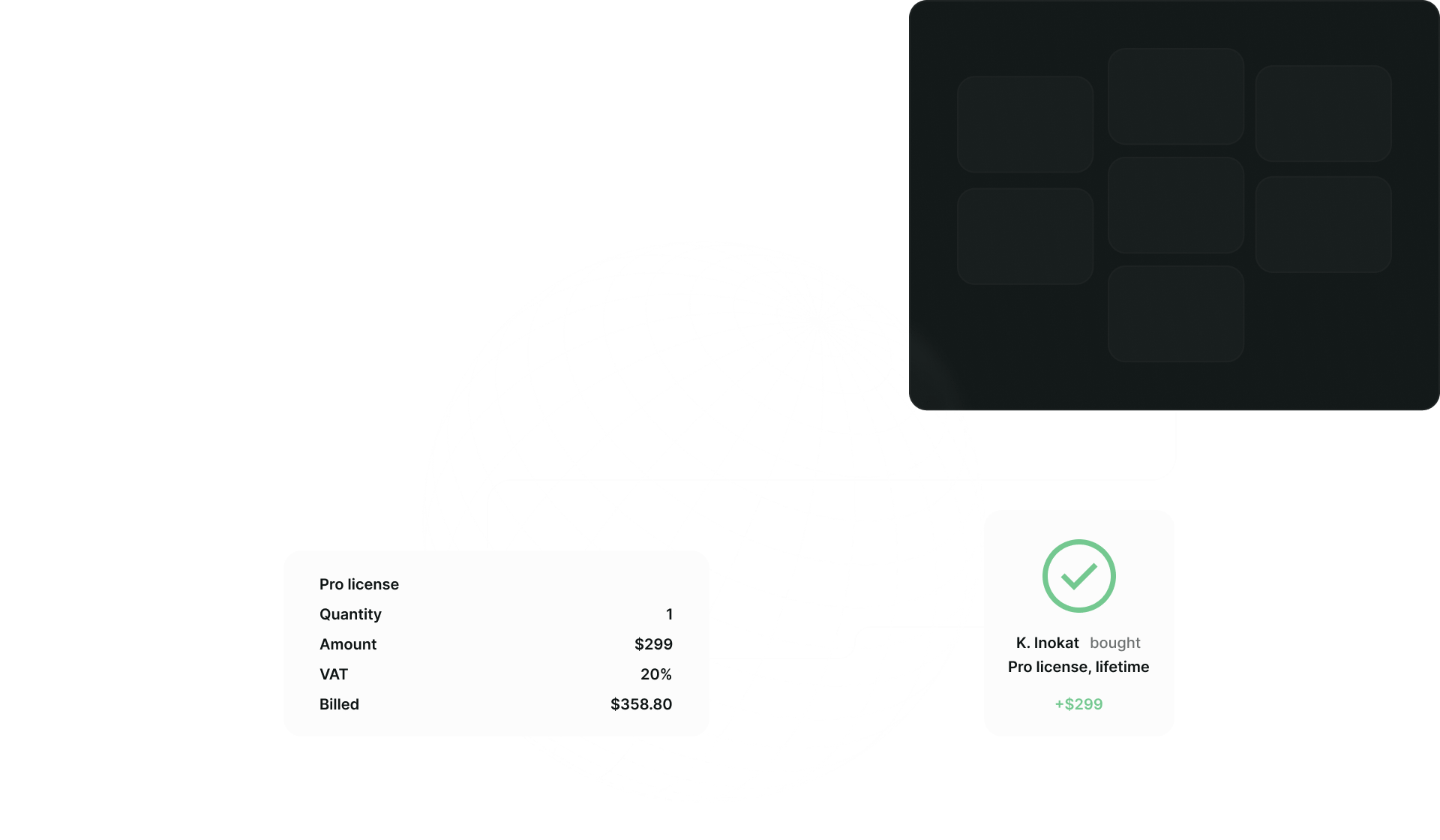
Recurly typically sits alongside a gateway and tax tooling, with some customers finding extra unexpected charges being added. Paddle is just one platform, with an all-inclusive, transparent cost.
Modern developer experience for rapid implementation and testing
Seamlessly localize pricing, A/B test payment methods and checkout optimization with Paddle's API-first platform. Minimal engineering resource required.
Clear reporting and no manual reconciliation
Recurly customers often find that reporting is not straightforward. With Paddle, reporting can be quickly reconciled across currencies and regions, with advanced subscription analytics so every team feels enabled.
Switching to Paddle helped n8n achieve 87% MRR growth in nine months
n8n, a multi-billion dollar AI automation company switched to Paddle and achieved phenomenal growth, along with a 8% increase in net revenue retention in one year.
Paddle's MoR model meant they offloaded compliance and operations, allowing them to focus on their product roadmap.

What you get with Paddle that Recurly doesn’t cover
Chargebacks fully managed to protect your revenue
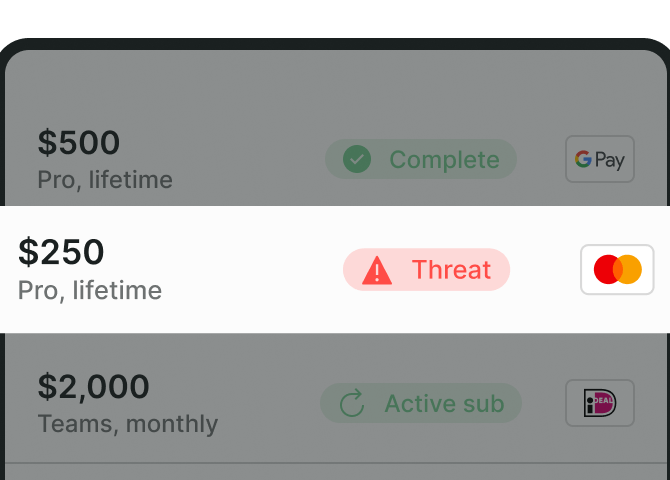
Recurly can help you track and manage chargebacks, but your team still needs to handle the dispute process itself. Paddle goes further by handling disputes and chargebacks as an operational motion, and actively puts measures in place to reduce them.
Consolidate your billing structure
Recurly manages subscriptions, but relies on a separate payment gateway to process payments. You’ll also need additional tools for tax compliance and fraud management. Paddle replaces the entire stack in one API-friendly integration.

Move to Paddle in 12 days or less
Dedicated migration support, from kickoff to go-live, trusted by both small high growth start ups and large established enterprises. Learn more
Phase 1: Set up
Scope and configure Paddle (Day 1-2)
Phase 2: Build and validate
Implement key flows and test safely using the webhook simulator (Day 3-7)
Phase 3: Go live and migrate
Run new customers on Paddle and migrate legacy subscriptions in parallel (Day 8-12)