If pricing wasn't already high on your list of priorities, AI makes it a non-negotiable.
Phil Carter has spent the last decade as a VC and product leader, helping companies like Faire, Quizlet, and Ibotta build world-class products and accelerate their growth.
Here Phil breaks down the top insights for pricing and packaging success in 2026.
Pricing and packaging is one of the most important levers that consumer subscription apps have for accelerating revenue growth.
Yet for some reason, many subscription apps set their subscription prices and packages based on a few basic heuristics and then don’t revisit them again for years.
This is usually a mistake, as I’ve seen pricing and packaging optimizations consistently increase subscription revenue by 5-15%, often while maintaining or even improving subscriber growth.

Going into 2026, subscription pricing and packaging decisions are more important than ever, because AI is changing how subscription apps approach monetization. This is a direct result of the non-trivial underlying costs of supporting AI-powered features.
Before AI, it cost most digital subscription apps nearly nothing to serve a marginal subscriber. In fact, freemium apps like Spotify, Duolingo, Strava, and Calm can even afford to give away free versions of their product to non-subscribers, because the marginal cost of supporting these users is virtually nothing so long as they aren’t using AI features.
With AI, this is no longer the case, because subscription apps have non-trivial compute costs they have to pay to LLM providers to support AI features. This has profoundly changed how AI apps approach their monetization strategies.
In a recent playbook I authored with Paddle, I outline four proven techniques consumer subscription businesses can use to optimize pricing and packaging.
I then highlight four specific tactics AI apps can use to improve monetization by better aligning consumer prices with the underlying costs of AI feature usage.
Read on for a taste of the content, or download the playbook in full here
Optimize your pricing and packaging with these four frameworks:
While there are many techniques for optimizing pricing and packaging, four of the best include:
- Van Westendorp: Ask respondents what price is “too cheap,” “cheap,” “expensive,” and “too expensive” to get an Acceptable Price Range (APR) and Optimal Price Point (OPP).
- Gabor-Granger: Ask respondents directly if they would purchase the product at $X, and continue iterating up and down until you identify the highest price they are willing to pay.
- MaxDiff: Show respondents sets of 3-4 product features across several rounds, and for each round, ask them which feature is most and least important to them.
- Conjoint: Show respondents sets of 2-3 full packages of prices and product features, and for each round, ask them which package they would select.
I’ve outlined the pros and cons of each technique in a recent playbook I co-authored with Steve Young and the team at Paddle, you can get that in-full below.
Align your monetization with your AI Costs:
While techniques like Van Westendorp, Gabor-Granger, MaxDiff, and Conjoint are great for optimizing subscription pricing and packaging, they leave out a very important variable: cost.
With more and more consumer subscription apps using LLMs to offer AI-powered features, it’s becoming increasingly important to evaluate the marginal cost of serving additional users and subscribers and then align pricing with these costs to support healthy unit economics.
Here are four specific tactics that AI subscription apps can use to improve their monetization:
1. Use cheaper, faster LLMs when their performance is good enough
Target Metrics:
- Subscription Gross Margin
- Trial Start Rate
- Trial Conversion Rate
- Subscriber Conversion Rate
Specific Tips:
- Test multiple LLMs to find the best one
- For your use case (Trip Use LLM Studio)
- Experiment with open-source models
- Depending on your use case, try trading off performance for speed and/or cost
2. Offer multiple subscription tiers with “basic” vs. “AI-powered” features (Example Duolingo)
Target Metrics:
- Subscription Gross Margin
- Subscriber LTV
Specific Tips:
- Conduct subscription pricing/packaging analysis (Van Westendorp, Gabor-Granger, and/or MaxDiff)
- Identify features with highest popularity and WTP
- Offer new subscription tiers at different prices
- Package AI features into higher-priced tiers with other features with the highest WTP.

3. Limit free trial lengths and freemium offerings to keep AI costs under control
Target Metrics:
- Subscription Gross Margin
- Trial Start Rate
- Trial Conversion Rate
- Subscriber Conversion Rate
Specific Tips:
- Consider 3-day vs. 7-day free trials
- Tightly restrict free product experience
- Put usage caps on AI features, power users remain subscribers and are never free users
- Sell additional AI credits as IAP
4. Charge subscribers for additional AI credits beyond a certain usage cap
Target Metrics:
- Subscription Gross Margin
- Subscriber LTV
Specific Tips:
- Offer multiple subscription plans with varying amounts of AI features
- Allow users to purchase AI credits à la carte if they exceed their cap
- Set prices for extra AI credits while nudging users towards subscriptions vs. PAYG over time
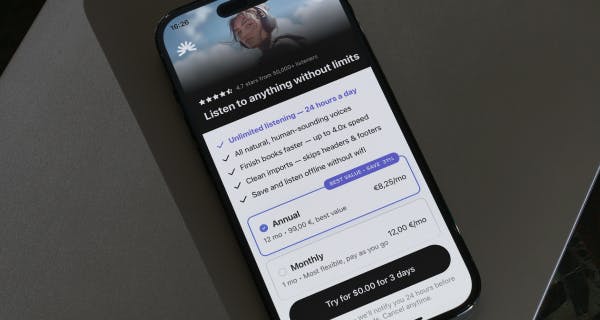
Pricing for growth in 2026
Pricing is no longer something you set once and revisit in a few years. In 2026, it is an ongoing discipline.
The best subscription apps continuously test willingness to pay, refine packaging around what customers actually value, and, if they are building with AI, tightly align pricing to marginal compute costs. Done well, this work can drive 5 to 15 percent revenue lifts without hurting growth.
The teams that win will balance customer value with strong unit economics.
Pricing is leverage so in 2026 treat it like it matters.